Cancer care treats the tumour. Someone has to treat the fear.
Onco-Anxiology is the clinical study and treatment of anxiety in cancer patients across the full cancer journey. This page sets out what the field is, the six phases it maps, the chapters and research behind it, and free education material you can put in a patient's hands this week.
01 — The field
What Onco-Anxiology is, and why it needs its own name.

Onco-Anxiology is an emerging area of clinical study and treatment of anxiety across the full cancer journey — from the first suspicion, through diagnosis and treatment, into survivorship, and to the end of life. It names anxiety specifically, as distinct from depression, adjustment disorder or general distress.
A patient with hypervigilance, anticipatory dread and a racing heart needs a different response from one with low mood and withdrawal. Naming them separately is the first step toward treating them correctly.
The field begins not at diagnosis, but at the moment the mind first grasps that there is a possibility of cancer. Someone finds a lump on a Tuesday, books an appointment, cancels it, rebooks it. By the time they reach the waiting room they have been afraid every day for three weeks — and they are not yet a patient.
Cancer care runs on a sequence of decisions, and every decision produces a wait. The diagnostic interval before a biopsy result. The days before a scan is read. The week treatment ends and the appointments stop. Clinically these are quiet periods — nothing is being done. For the patient they are the loudest part of the illness.

Onco-Anxiology vs psycho-oncology
Psycho-oncology opened the whole psychological dimension of cancer care. Onco-Anxiology narrows the lens to anxiety — its biology, its measurement, its treatment — and sets clinical standards for it.
Anxiety vs fear vs distress
Fear has an object: the biopsy happening now. Anxiety expects threat without a target and persists when nothing is happening. Distress is the umbrella term; it is not a diagnosis.
Anxiety vs appropriate concern
The question is not whether the fear makes sense. It is whether the fear is stopping someone from sleeping, attending appointments, or being present in their life.
The biology behind anxiety in cancer patients
Onco-Anxiology explains cancer-related anxiety through interconnected neurobiological pathways, including HPA-axis activation, amygdala sensitisation, prefrontal suppression during acute stress, and neuroinflammation from cytokines crossing the blood–brain barrier during chemotherapy and radiation.
Six phases. Six distinct expressions of cancer anxiety.
Cancer anxiety is not static—it evolves throughout the cancer journey. At every phase, its triggers, manifestations, and needs can change, requiring tailored assessment and phase-specific intervention.

Phase 01- Pre-diagnosis anxiety
The diagnostic interval — symptom to answer — is where screening avoidance, health anxiety and shame keep people out of clinics. Genetic high-risk populations live here permanently.

Phase 02- Anxiety at diagnosis
Acute stress suppresses the prefrontal cortex, so patients retain almost nothing said in the consultation. Structured disclosure, written summaries and a planned follow-up call do the real information transfer.
Phase 03- Treatment-phase anxiety
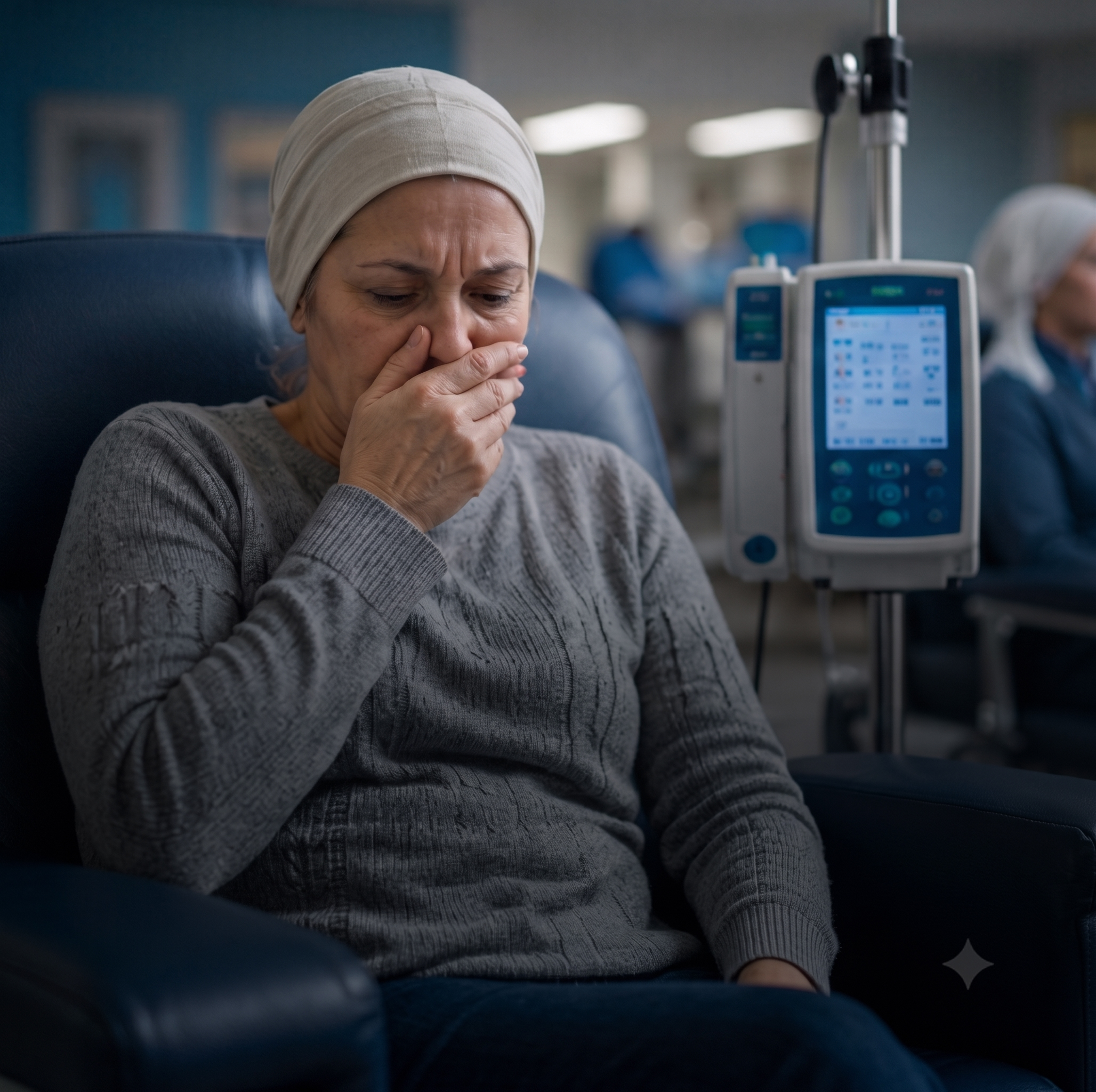
Anticipatory nausea, needle and port fear, claustrophobia in radiation masks, and the cumulative dread of cycle days. Procedural anxiety that threatens adherence is a clinical priority, not a comfort issue.

Phase 04- Scanxiety & recurrence fear
Anxiety rises days before imaging and spikes in the reporting gap. Fear of recurrence then persists for years, maintained by a safety-seeking loop in which reassurance briefly relieves and durably reinforces.
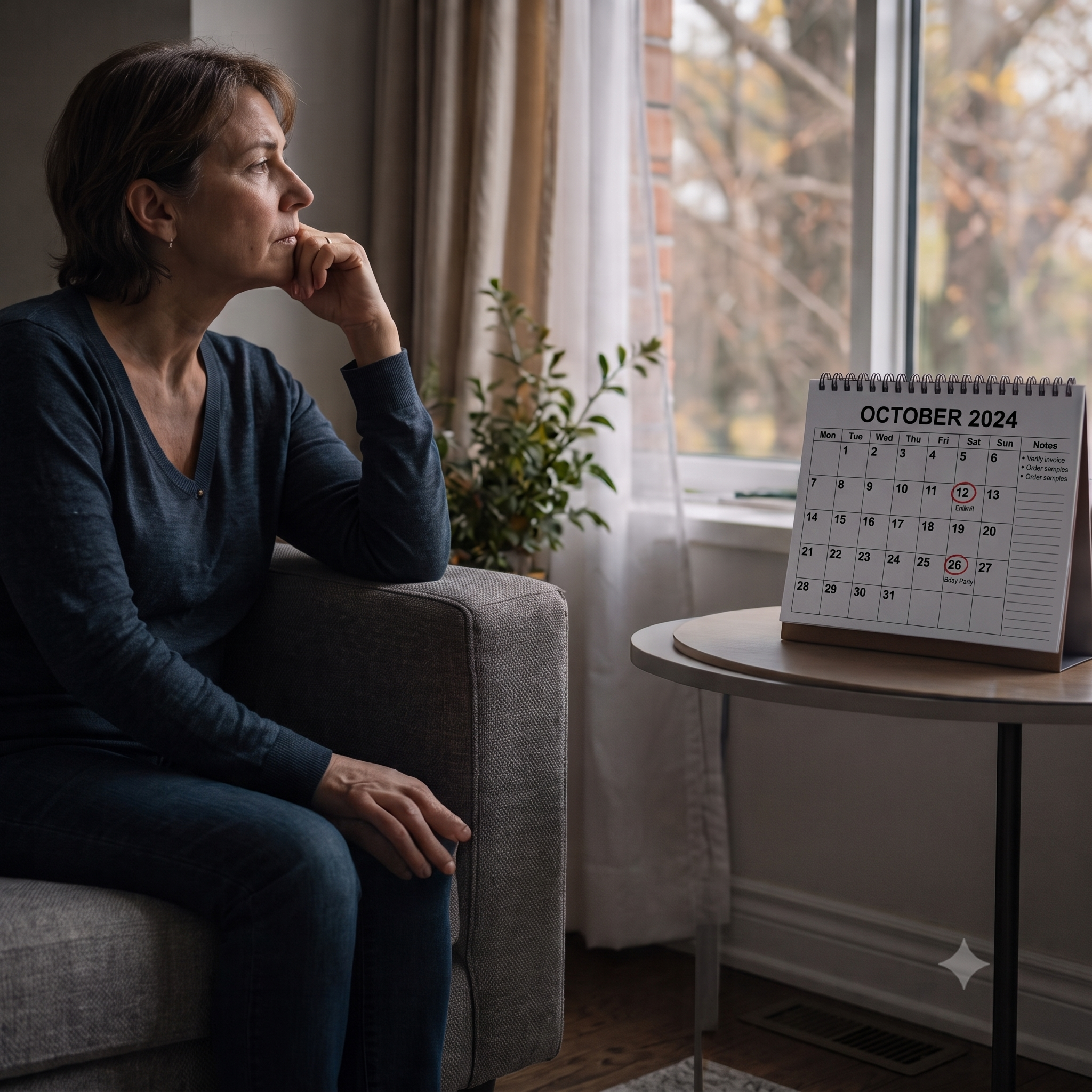
Phase 05- Post-treatment anxiety
The treatment-completion paradox: the appointments stop, the safety net feels removed, and anxiety rises exactly when everyone else expects relief. The highest-risk window sits around six weeks post-treatment.
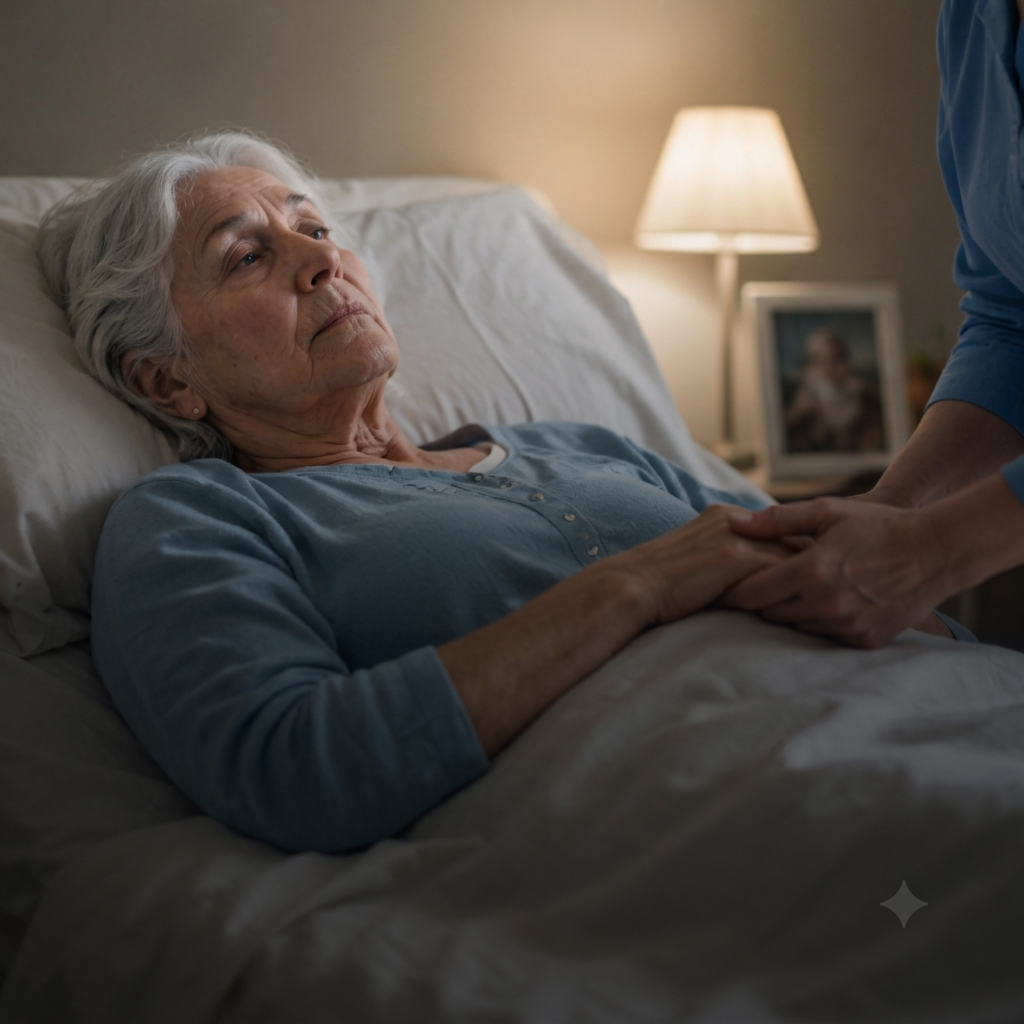
Phase 06- End-of-life & existential dread
Fear of dependence, of pain, of being forgotten. Meaning-centred and dignity-based approaches address what symptom control alone cannot. Apparent acceptance frequently masks existential terror.
Where it attaches in cancer treatment
Onco-anxiology sits alongside medical, surgical and radiation oncology rather than after them. Each modality carries a characteristic anxiety, and knowing which one to expect is half the assessment.



This table is a teaching aid, not a treatment protocol. Modality choice always follows tumour type, stage, biology and the individual patient's fitness and preference — the anxiety column describes what to screen for, not what to expect in every case.
02 — Key chapters explained
Eight chapters that change what happens in the clinic.
Onco-Anxiology runs to 28 chapters across seven parts. These eight carry the most immediate clinical weight — each one summarised here in the form a busy oncology team can actually use.
CHAPTER 01 · PART I
What is onco-anxiology?
Defines the field at the crossroads of oncology and mental health. Separates anxiety from fear, from distress, and from appropriate concern — because a patient with hypervigilance and a racing heart needs a different response from one with low mood and withdrawal.
The test is not whether the fear is reasonable. It is whether the fear is interfering with sleep, treatment or life.
CHAPTER 02 · PART I
The biology of cancer anxiety
HPA-axis activation, amygdala sensitisation, prefrontal suppression during acute stress, and neuroinflammation from cytokines crossing the blood–brain barrier during treatment. Anxiety here is measurable physiology, not a character trait.
Telling a patient their alarm system is working correctly — but cannot switch off — changes how they hear the diagnosis.
CHAPTER 05 · PART II
Anxiety at diagnosis
Acute stress suppresses the prefrontal cortex, so patients retain almost nothing said in the consultation. Chapter 5 covers structured disclosure, written summaries, and the follow-up call that does the real information transfer.
Assume the first consultation was not heard. Plan the second one accordingly.
CHAPTER 07 · PART II
Scanxiety and recurrence fear
Anxiety that rises days before imaging and spikes in the reporting gap, and the fear of recurrence that persists for years afterwards. Covers the safety-seeking loop in which reassurance briefly relieves and durably maintains the fear.
Shortening the scan-to-result gap is a psychological intervention, and one of the cheapest available.
CHAPTER 10 · PART III
Screening tools and clinical interviews
Distress Thermometer, GAD-7, HADS, FCRI-Severity and PHQ-9 — what each measures, how long it takes, and where it belongs in the pathway. Includes the referral routes that make a positive screen mean something.
Screening without a defined pathway for positive results is documentation, not care.
CHAPTER 11 · PART III
Differential diagnosis
Before anxiety is treated as anxiety, rule out corticosteroid agitation, akathisia from antiemetics, opioid toxicity or withdrawal, thyroid dysfunction, hypoxia, delirium and paraneoplastic syndromes.
Akathisia mistaken for anxiety is one of the most consequential missed diagnoses in oncology. Review the medication list first.
CHAPTER 13 · PART IV
Cognitive behavioural therapy in oncology
CBT adapted for medical reality, where the feared outcome is sometimes real. Behavioural experiments, graded exposure for needle and scanner phobia, and worry postponement rather than thought suppression.
Standard CBT scripts fail when the catastrophe is genuinely possible. The adaptation is the clinical skill.
CHAPTER 23 · PART VI
Caregiver and family anxiety
Caregivers frequently score as high as patients on anxiety measures and are almost never screened. Covers assessment of the family unit, role strain, and financial stress as an anxiety driver in its own right.
Ask about money. In many settings, financial strain is a larger anxiety driver than the prognosis.
Remaining Chapters & Annexes
The remaining chapters cover epidemiology, treatment-phase and survivorship anxiety, end-of-life and existential fear, ACT, mindfulness, meaning-centred and group therapies, anxiolytic prescribing, integrative modalities, paediatric and cross-cultural contexts, clinician burnout, service integration and digital delivery.
03 - Research Papers
The Evidence Behind Onco-Anxiology
The evidence base behind Onco-Anxiology explores the causes, mechanisms, assessment, and management of anxiety in cancer patients. Selected primary research is grouped by key questions, with systematic reviews and meta-analyses prioritised wherever available.
These studies provide insight into cancer anxiety across different stages of the cancer journey. A full reference list, organised by section, appears in the book.
| Study | Design | Key finding |
|---|---|---|
| Mitchell AJ et al. - Lancet Oncology, 2011 | Meta-analysis, 94 interview-based studies | Anxiety disorders present in a substantial minority of patients in oncological and haematological settings; roughly one in three develop clinical anxiety at some point. |
| Zabora J et al. - Psycho-Oncology, 2001 | Cross-sectional, 4,496 patients | Distress prevalence varies markedly by tumour site, arguing for site-specific screening rather than a single threshold. |
| Linden W et al. - Journal of Affective Disorders, 2012 | Cross-sectional, 10,153 patients | Anxiety exceeds depression in prevalence and is highest in younger patients and in women. |
Study
Mitchell AJ et al. - Lancet Oncology, 2011
Design
Meta-analysis, 94 interview-based studies
Key finding
Anxiety disorders present in a substantial minority of patients in oncological and haematological settings; roughly one in three develop clinical anxiety at some point.
Study
Zabora J et al. - Psycho-Oncology, 2001
Design
Cross-sectional, 4,496 patients
Key finding
Distress prevalence varies markedly by tumour site, arguing for site-specific screening rather than a single threshold.
Study
Linden W et al. - Journal of Affective Disorders, 2012
Design
Cross-sectional, 10,153 patients
Key finding
Anxiety exceeds depression in prevalence and is highest in younger patients and in women.
| Study | Design | Key finding |
|---|---|---|
| Kangas M et al. - Psychological Bulletin, 2002 | Systematic review | Diagnosis and treatment function as traumatic stressors, with acute stress reactions clustering in the first weeks. |
| Brocken P et al. - Lung Cancer, 2012 | Systematic review of diagnostic intervals | Longer waits for diagnostic certainty are associated with higher distress; rapid diagnostic pathways reduce it. |
Study
Kangas M et al. - Psychological Bulletin, 2002
Design
Systematic review
Key finding
Diagnosis and treatment function as traumatic stressors, with acute stress reactions clustering in the first weeks.
Study
Brocken P et al. - Lung Cancer, 2012
Design
Systematic review of diagnostic intervals
Key finding
Longer waits for diagnostic certainty are associated with higher distress; rapid diagnostic pathways reduce it.
| Study | Design | Key finding |
|---|---|---|
| Bauml JM et al. - JNCCN, 2016 | Cross-sectional survey of scan-associated distress | Scan-associated distress is common and concentrated in the interval between imaging and result disclosure. |
| Simard S, Savard J - Supportive Care in Cancer, 2009 | Instrument development and validation (FCRI) | Fear of cancer recurrence is measurable as a distinct multidimensional construct with a usable severity subscale. |
| Simard S et al. - Journal of Cancer Survivorship, 2013 | Systematic review, 130 studies | Fear of recurrence persists for years after treatment and does not reliably decline with time alone. |
Study
Bauml JM et al. - JNCCN, 2016
Design
Cross-sectional survey of scan-associated distress
Key finding
Scan-associated distress is common and concentrated in the interval between imaging and result disclosure.
Study
Simard S, Savard J - Supportive Care in Cancer, 2009
Design
Instrument development and validation (FCRI)
Key finding
Fear of cancer recurrence is measurable as a distinct multidimensional construct with a usable severity subscale.
Study
Simard S et al. - Journal of Cancer Survivorship, 2013
Design
Systematic review, 130 studies
Key finding
Fear of recurrence persists for years after treatment and does not reliably decline with time alone.
| Study | Design | Key finding |
|---|---|---|
| Roth AJ et al. - Cancer, 1998 | Validation study (Distress Thermometer) | A single-item visual scale performs adequately as a rapid first-pass screen. |
| Spitzer RL et al. - Archives of Internal Medicine, 2006 | Validation study (GAD-7) | Seven items give a reliable severity measure for generalised anxiety in medical settings. |
| Zigmond AS, Snaith RP - Acta Psychiatrica Scandinavica, 1983 | Instrument development (HADS) | Separating anxiety and depression subscales, with somatic items excluded, suits physically ill populations. |
Study
Roth AJ et al. - Cancer, 1998
Design
Validation study (Distress Thermometer)
Key finding
A single-item visual scale performs adequately as a rapid first-pass screen.
Study
Spitzer RL et al. - Archives of Internal Medicine, 2006
Design
Validation study (GAD-7)
Key finding
Seven items give a reliable severity measure for generalised anxiety in medical settings.
Study
Zigmond AS, Snaith RP - Acta Psychiatrica Scandinavica, 1983
Design
Instrument development (HADS)
Key finding
Separating anxiety and depression subscales, with somatic items excluded, suits physically ill populations.
| Study | Design | Key finding |
|---|---|---|
| Faller H et al. - Journal of Clinical Oncology, 2013 | Meta-analysis of psycho-oncological interventions | Individual and group psychotherapy produce small-to-moderate, durable reductions in emotional distress. |
| Piet J, Würtzen H, Zachariae R - JCCP, 2012 | Meta-analysis of mindfulness-based therapy | Mindfulness-based programmes reduce anxiety and depression in patients and survivors. |
| Breitbart W et al. - Journal of Clinical Oncology, 2015 | Randomised controlled trial | Meaning-centred group psychotherapy improves spiritual wellbeing and reduces distress in advanced cancer. |
| Chochinov HM et al. - Lancet Oncology, 2011 | Randomised controlled trial (dignity therapy) | A brief dignity-based intervention improves end-of-life experience on patient-reported measures. |
| Bradt J et al. - Cochrane Database, 2016 | Cochrane systematic review, 52 trials | Music interventions reduce anxiety, pain and fatigue with no reported harms. |
Study
Faller H et al. - Journal of Clinical Oncology, 2013
Design
Meta-analysis of psycho-oncological interventions
Key finding
Individual and group psychotherapy produce small-to-moderate, durable reductions in emotional distress.
Study
Piet J, Würtzen H, Zachariae R - JCCP, 2012
Design
Meta-analysis of mindfulness-based therapy
Key finding
Mindfulness-based programmes reduce anxiety and depression in patients and survivors.
Study
Breitbart W et al. - Journal of Clinical Oncology, 2015
Design
Randomised controlled trial
Key finding
Meaning-centred group psychotherapy improves spiritual wellbeing and reduces distress in advanced cancer.
Study
Chochinov HM et al. - Lancet Oncology, 2011
Design
Randomised controlled trial (dignity therapy)
Key finding
A brief dignity-based intervention improves end-of-life experience on patient-reported measures.
Study
Bradt J et al. - Cochrane Database, 2016
Design
Cochrane systematic review, 52 trials
Key finding
Music interventions reduce anxiety, pain and fatigue with no reported harms.
| Study | Design | Key finding |
|---|---|---|
| Geng H-M et al. - Medicine, 2018 | Meta-analysis of caregiver samples | Family caregivers show anxiety prevalence comparable to patients, yet are rarely screened in routine care. |
Study
Geng H-M et al. - Medicine, 2018
Design
Meta-analysis of caregiver samples
Key finding
Family caregivers show anxiety prevalence comparable to patients, yet are rarely screened in routine care.
04 — Patient Education
Understanding cancer anxiety through Onco-Anxiology
Eight practical handouts designed to help patients and families understand and manage cancer anxiety at different stages of the cancer journey. Written in plain language, without unnecessary jargon, each handout is short enough to read in a waiting room and practical enough to act on.
Handout 01

What is cancer anxiety?
For any patient, at any stage. Names the experience, explains how common it is, and makes clear it is treatable.
Handout 02
Why your body feels this way
The biology in simple terms — cortisol, the amygdala, the alarm that works correctly but will not switch off.
Handout 03
Before the scan
Managing scanxiety in the days before imaging and the gap before the result arrives.
Handout 04
When treatment ends
For the drop that follows the last session — when the appointments stop and the safety net feels removed.
Handout 05
Fear of cancer coming back
For survivorship. Why reassurance stops working, and what helps instead.
Handout 06
Breathing and music for anxiety
Two tools that need no appointment, no prescription and no equipment. Usable at 3 a.m.
Handout 07
A guide for caregivers and families
For the people carrying it alongside the patient — and usually never asked how they are.
Handout 08
When to ask for more help
Clear thresholds, and the exact words to use when raising it with a clinical team.
If you are the patient
Feeling frightened after a cancer diagnosis is a normal response to an abnormal situation. It is not a weakness, and it is not a sign that you are coping badly. The question worth asking is not whether your fear makes sense — it almost certainly does — but whether it is getting in the way of your sleep, your treatment, your relationships or your day.
When it starts interfering with those things, it has crossed into something that deserves treatment. Say so to your team. Clinical teams expect this conversation, and patients who raise it tend to receive better care overall.
If you are the caregiver
You may worry that suggesting psychological support implies something is seriously wrong. It does not. It means taking the anxiety as seriously as the tumour — which is what good cancer care already does.
Your own anxiety is also real and also measurable. Caregivers often score as high as patients on anxiety scales and are rarely screened for it. Handout 7 is written for you, not about you.
Tell us where you work. We will send the right edition.
Two editions are available. Clinicians and departments receive the full clinical text with screening instruments and case studies. Patients, families and caregivers receive the education edition — the eight handouts, in plain language, with nothing to buy.

Delivered by email
You will receive the book as a PDF attachment.

Your information is secure
We respect your privacy. No spam. Ever.

Evidence-based
Created from the best available research.

Save & share
Download, read offline and share within your team.